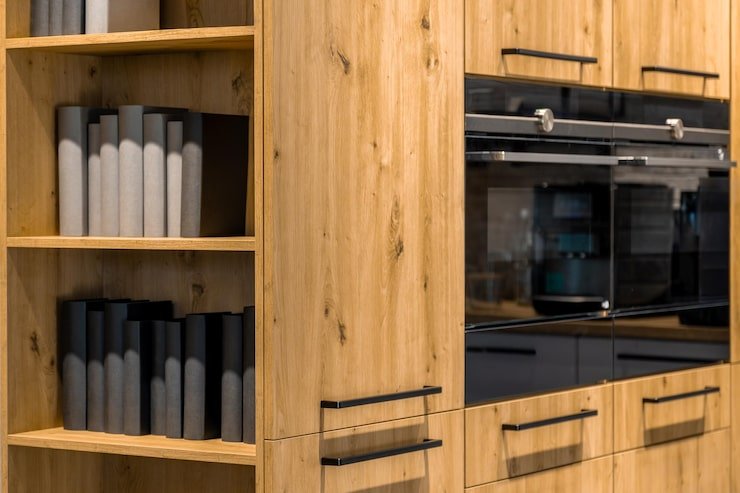
Choosing the right types of wood cabinets can have a major impact on the appearance, durability, maintenance, and overall character of a kitchen or other living space. vary considerably in color, grain pattern, hardness, price, and ability to accept paint or stain. Popular choices include oak, maple, cherry, hickory, birch, walnut, alder, ash, and other wood species. Each option offers different advantages, so the best choice depends on your preferred design, budget, lifestyle, and desired finish.
Why Wood Matters When Choosing Cabinets
Cabinets are one of the most noticeable elements in a kitchen. They occupy significant wall and floor space and influence the overall visual style of the room. The wood species used for cabinet doors and other components can affect everything from the color and texture to the way the cabinets age.
Natural wood also varies from board to board. Differences in grain, knots, mineral streaks, and color are normal characteristics rather than necessarily being defects. The National Kitchen & Bath Association notes that species such as oak, maple, cherry, birch, hickory, ash, and pine have traditionally been used for cabinetry, with each offering distinctive appearance and working characteristics.
Before selecting a material, homeowners should think about more than appearance. Durability, moisture exposure, cleaning requirements, finish, construction, and budget all deserve consideration.
Types of Wood Cabinets
Several wood species are commonly selected for kitchen and bathroom cabinetry. Some are especially popular for painted finishes, while others are valued for their natural grain.
1. Oak Cabinets
Oak is one of the most recognizable cabinet woods. It has a pronounced grain pattern and is available in both red and white varieties.
Red oak typically has warmer and more reddish undertones, while white oak generally has a lighter and more neutral appearance.
Oak is particularly suitable for homeowners who want visible natural grain. It also accepts stains well, making it possible to change the tone while retaining the character of the wood.
Best for: Traditional, farmhouse, craftsman, and transitional interiors.
Advantages:
- Strong and durable
- Distinctive grain
- Takes stain well
- Available in different tones
- Suitable for busy kitchens
Potential drawback: Its prominent grain may not appeal to people looking for an extremely smooth or uniform appearance.
2. Maple Cabinets
Maple is known for its relatively fine, consistent grain and light natural color. It is frequently selected for painted cabinets because its relatively uniform surface can provide a clean appearance.
Maple also works well in contemporary and traditional kitchens. Its light tone can make a room feel brighter and more open.
Best for: Modern, transitional, minimalist, and painted kitchens.
Advantages:
- Durable hardwood
- Light natural appearance
- Fine grain
- Works well with many finishes
- Suitable for detailed cabinet designs
Maple is frequently recommended for painted cabinetry because of its relatively tight grain and smooth appearance.
3. Cherry Cabinets
Cherry has a warm, reddish-brown appearance that can become deeper and richer with age and exposure to light. It has a relatively smooth grain and is often associated with traditional or elegant interiors.
Cherry can work beautifully with a clear finish because its natural color is already distinctive.
Best for: Traditional, formal, classic, and luxury-inspired kitchens.
Advantages:
- Rich natural color
- Smooth grain
- Elegant appearance
- Develops character with age
- Works well with clear and warm finishes
Potential drawback: It is generally more expensive than many common cabinet woods.
4. Hickory Cabinets
Hickory is recognized for its dramatic variation in color and grain. Individual boards can have significant differences between light and dark areas, creating a highly natural appearance.
It is also a very hard wood, making it attractive for households where cabinet durability is important.
Best for: Rustic, farmhouse, country, lodge, and natural-style kitchens.
Advantages:
- Very durable
- Strong natural variation
- Distinctive grain
- Excellent for rustic interiors
- Creates a highly natural look
Hickory is among the harder commonly used cabinet woods, making it an appealing option for high-use spaces.
5. Birch Cabinets
Birch offers a relatively light color and subtle grain. It is often considered a practical alternative to more expensive hardwood options.
Its relatively uniform appearance makes it useful for painted cabinetry, while it can also be stained with appropriate preparation.
Best for: Budget-conscious remodels, contemporary kitchens, and painted cabinets.
Advantages:
- Generally affordable
- Light appearance
- Relatively subtle grain
- Works well with paint
- Suitable for simple designs
Birch is often positioned as a value-oriented alternative to maple because of its combination of appearance, workability, and cost.
6. Walnut Cabinets
Walnut is a premium wood recognized for its deep brown color and sophisticated grain. It can bring a strong natural focal point to a kitchen without requiring an elaborate stain.
Walnut is especially attractive in modern and contemporary interiors where natural materials are intended to stand out.
Best for: Luxury, contemporary, modern, and statement kitchens.
Advantages:
- Rich natural color
- Elegant grain
- Premium appearance
- Works well with clear finishes
- Strong visual character
Potential drawback: Walnut is generally more expensive than many mainstream cabinet woods.
7. Alder Cabinets
Alder is a softer hardwood with a warm appearance and relatively smooth texture. It can provide a rustic or traditional look, particularly when knots and natural variations are intentionally preserved.
It is also relatively easy to work with, which can make it suitable for customized cabinet designs.
Best for: Rustic, traditional, cottage, and relaxed interiors.
Advantages:
- Warm appearance
- Smooth texture
- Easy to work with
- Available with natural variations
- Suitable for rustic finishes
Because alder is softer than several common hardwoods, it may show dents and marks more readily in heavily used areas.
8. Ash Cabinets
Ash has a noticeable grain and a naturally light appearance. It can provide some of the visual qualities people like about oak while offering a lighter overall look.
It can work particularly well with contemporary stains and natural finishes.
Best for: Modern, Scandinavian-inspired, transitional, and light-toned kitchens.
Advantages:
- Light natural color
- Attractive grain
- Takes stains well
- Durable hardwood
- Works with modern finishes
Ash has traditionally been used for cabinet interiors and other cabinetry applications, while its open grain can also make it attractive for visible surfaces.
Quick Comparison of Cabinet Woods
| Wood | Appearance | Durability | Best Finish | Common Style |
|---|---|---|---|---|
| Oak | Pronounced grain, warm to neutral | High | Stain | Traditional |
| Maple | Light and relatively uniform | High | Paint or light stain | Modern |
| Cherry | Warm red-brown | Moderate to high | Clear or warm stain | Classic |
| Hickory | Dramatic natural variation | Very high | Clear or natural stain | Rustic |
| Birch | Light and subtle | High | Paint or stain | Contemporary |
| Walnut | Deep brown and elegant | Moderate | Clear/natural | Luxury |
| Alder | Warm and smooth | Moderate | Stain or glaze | Rustic |
| Ash | Light with visible grain | High | Stain or paint | Modern |
Actual performance also depends on cabinet construction, finish quality, hardware, installation, and maintenance rather than wood species alone.
Solid Wood vs. Wood-Based Cabinet Construction
Choosing a wood species is only part of the cabinet decision. The construction of the cabinet matters as well.
A cabinet may contain solid wood components while using plywood, engineered panels, or other materials for flat sections such as sides, backs, shelves, and drawer bottoms. This approach is common because different materials can provide practical advantages for different components.
Solid Wood
Solid wood provides natural grain and can be refinished in many applications. It is particularly attractive for doors, face frames, and decorative components.
However, natural wood can respond to changes in moisture and humidity, so proper construction and finishing are important.
Plywood
Plywood consists of multiple layers of wood veneer bonded together. Cabinet-grade plywood is often selected for boxes and structural components because of its strength and dimensional stability.
Veneer
Wood veneer consists of a thin layer of natural wood applied over another substrate. It can provide the appearance of a particular species while reducing the amount of solid lumber required.
Engineered Wood
Engineered wood products can offer consistent dimensions and surfaces. They are often used in combination with natural wood rather than as a complete replacement for every cabinet component.
How to Choose Cabinet Wood for a Painted Finish
If you plan to paint your cabinets, grain visibility should be an important consideration.
Maple and birch are often suitable because of their relatively fine and consistent grain. Poplar is also commonly used in painted cabinetry because it is easy to work with and has a relatively uniform surface, although it is softer than many hardwood choices.
A painted cabinet can also be influenced by the construction of the door. Proper preparation, primer, paint quality, sanding, and application technique are important for achieving a smooth finish.
How to Choose Wood for a Natural or Stained Finish
If you want the natural grain to remain visible, choose a species based on its grain pattern and natural color.
White oak is popular for contemporary natural finishes because of its noticeable grain and relatively neutral appearance. Cherry offers warmer tones, walnut creates a deeper luxury appearance, and hickory provides dramatic variation.
Oak has historically been valued for its ability to accept a broad range of stains while retaining its distinctive grain.
The sample should be viewed in the actual room whenever possible because lighting can significantly change how wood color appears.
Consider Durability and Everyday Use
A kitchen used several times a day places different demands on cabinets than a decorative storage area.
Families with children, pets, or heavy cooking activity may want to prioritize harder and more durable woods. Hickory, maple, oak, and ash are examples of commonly used hardwoods with strong wear resistance.
The Janka hardness scale is one way to compare the relative resistance of different woods to denting. Current cabinet comparisons place hickory among the hardest commonly used options, followed by woods such as maple, oak, and ash.
However, hardness is not the only measure of cabinet quality. Construction, finish, hardware, joinery, and installation all affect long-term performance.
Choosing Wood Based on Kitchen Style
The visual style of the room should influence your choice.
Modern Kitchen
Light maple, white oak, ash, or walnut can work well in modern designs. Simple door profiles and natural finishes can emphasize the beauty of the wood.
Farmhouse Kitchen
White oak, hickory, alder, and traditional oak can complement farmhouse interiors. Natural variation often adds warmth and character.
Traditional Kitchen
Cherry and oak are classic choices for traditional kitchens. Raised-panel doors, decorative hardware, and warm finishes can reinforce the style.
Minimalist Kitchen
A simple-grain wood with a consistent finish can help create a clean appearance. Maple, birch, or carefully selected white oak can work well.
Budget Considerations
Cabinet cost depends on much more than the wood species.
Important factors include:
- Cabinet size
- Number of cabinets
- Door construction
- Cabinet box material
- Hardware
- Finish
- Customization
- Installation
- Interior accessories
- Wood grade
- Availability of the species
Some industry guides estimate that species alone may have a relatively modest effect on the total cabinet price compared with factors such as construction and customization.
Therefore, homeowners should compare complete cabinet specifications rather than selecting a wood solely because it has a lower material price.
Common Mistakes to Avoid
Choosing Only by Color
A cabinet may look beautiful in a showroom but appear different under your home’s lighting. Always consider grain, undertones, and finish.
Ignoring Maintenance
Natural wood may require appropriate cleaning and maintenance. Avoid assuming that every wood species and finish can be treated in exactly the same way.
Focusing Only on the Door
The cabinet door is important, but the box, shelves, drawer construction, hinges, slides, and installation also contribute to overall quality.
Ignoring Moisture
Kitchens and bathrooms can expose cabinets to moisture and humidity. Proper sealing, installation, ventilation, and maintenance are important.
Selecting Trendy Wood Without Considering the Home
Current design trends can be useful for inspiration, but cabinetry is a long-term investment. Recent design coverage shows renewed interest in warmer natural wood tones, including honey oak, demonstrating how preferences can cycle over time.
Key Points to Remember
- Cabinet wood affects appearance, durability, finish, and maintenance.
- Oak offers strong grain and excellent versatility.
- Maple is a popular choice for smooth painted finishes.
- Cherry provides warm, traditional character.
- Hickory offers exceptional hardness and dramatic grain variation.
- Birch can provide good value for painted or contemporary cabinetry.
- Walnut creates a premium and sophisticated appearance.
- Alder offers a softer, warm option for rustic interiors.
- Ash provides a light color with attractive visible grain.
- Cabinet construction is just as important as the wood species.
- Always compare complete cabinet specifications rather than species alone.
- Choose the finish and overall style before making a final decision.
Final Thoughts
Choosing cabinet wood is an important part of designing a kitchen that looks attractive and performs well for years. There is no single material that is perfect for every home. The right choice depends on how the space is used, the desired appearance, the preferred finish, the amount of natural variation you want, and your budget.
Oak and maple remain versatile choices, while cherry, walnut, and hickory can create more distinctive appearances. Birch and alder can provide practical alternatives for homeowners with specific budget or style requirements. Ash is another attractive option for people who want a light wood with visible grain.
Most importantly, do not evaluate cabinet wood in isolation. Consider the entire cabinet construction, finish, hardware, installation, and maintenance requirements. A well-selected combination of materials and craftsmanship can create cabinetry that is both functional and visually appealing.
Frequently Asked Questions
1. Which wood is most commonly used for kitchen cabinets?
Oak, maple, cherry, birch, and other hardwoods are commonly used for kitchen cabinetry. The best choice depends on the desired appearance, finish, durability, and budget.
2. Which wood is best for painted cabinets?
Maple and birch are popular choices for painted cabinets because they have relatively fine and consistent grain. Poplar is also frequently used for painted components, although it is softer than many hardwoods.
3. Which cabinet wood is the most durable?
Several hardwoods provide excellent durability. Hickory is particularly hard, while maple, oak, and ash also offer good resistance to everyday wear. Cabinet construction and finish also have a major influence on durability.
4. Is natural wood better than engineered cabinet material?
Not automatically. Solid wood offers natural beauty and can be appropriate for doors and frames, while plywood and engineered materials can provide stability and consistency for cabinet boxes and other components. A combination can offer practical benefits.
5. How do I choose the right cabinet wood for my kitchen?
Start with your desired style and finish, then consider durability, maintenance, budget, moisture exposure, and cabinet construction. Comparing physical samples under your kitchen’s lighting can help you make a more accurate decision.
| Read more: Carpet Cleaning Deals: |