


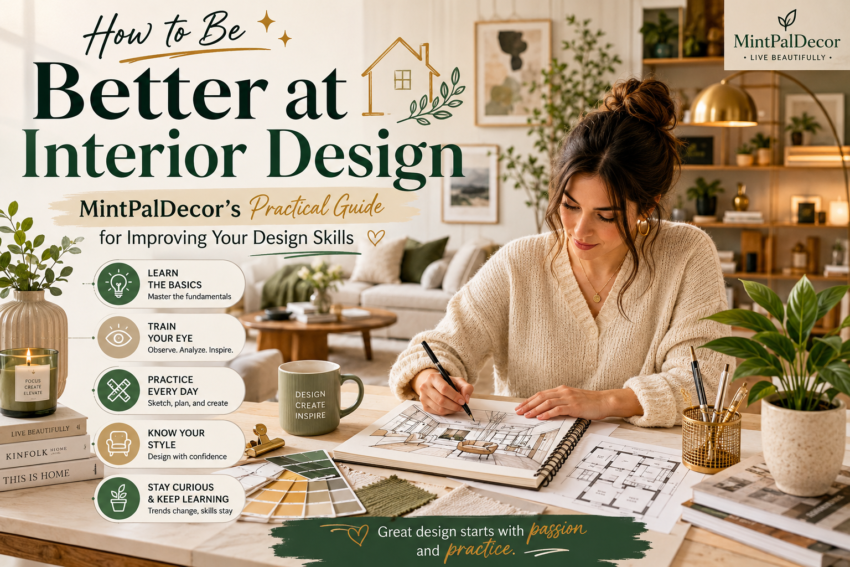
Interior design is a skill that combines creativity, functionality, and problem-solving. While some people seem to have a natural eye for design, the truth is that great interior designers develop their abilities through practice, observation, and continuous learning. Whether you’re decorating your own home, pursuing a design career, or simply passionate about creating beautiful spaces, there are many ways to improve your interior design skills.
At MintPalDecor, we believe that becoming better at interior design isn’t about following every trend. It’s about understanding how people interact with spaces and learning how to create environments that are both attractive and functional.
This guide explores practical strategies that can help anyone become more confident and skilled in interior design.
Why Improving Your Interior Design Skills Matters
Good interior design goes beyond aesthetics. A well-designed space can improve comfort, productivity, mood, and overall quality of life.
By developing stronger design skills, you can:
- Create more functional rooms
- Improve visual appeal
- Maximize available space
- Make better decorating decisions
- Increase property value
- Express personal style more effectively
The more you understand design principles, the easier it becomes to transform ordinary spaces into exceptional ones.
Learn the Basic Principles of Interior Design
Before experimenting with advanced concepts, it’s important to understand the foundations of good design.
Balance
Balance creates visual stability within a room.
There are three main types:
- Symmetrical balance
- Asymmetrical balance
- Radial balance
Proper balance prevents a room from feeling cluttered or uneven.
Harmony
All design elements should work together to create a cohesive appearance.
This includes:
- Colors
- Furniture
- Textures
- Materials
- Decorative accessories
Proportion and Scale
Furniture and décor should be appropriately sized for the room.
Large furniture can overwhelm small spaces, while tiny pieces may feel lost in larger rooms.
Emphasis
Every room should have a focal point that naturally draws attention.
Examples include:
- Fireplaces
- Artwork
- Statement lighting
- Accent walls
Understanding these principles provides a strong foundation for future growth.
Study Great Interior Designs
One of the fastest ways to improve is by analyzing professionally designed spaces.
Pay attention to:
- Furniture layouts
- Color combinations
- Lighting strategies
- Material selections
- Decorative details
Instead of simply admiring a room, ask yourself:
- Why does this design work?
- What creates visual interest?
- How is the space organized?
- What emotions does the room evoke?
Learning to observe design critically strengthens your creative instincts.
Develop an Understanding of Color
Color is one of the most powerful tools in interior design.
Learn Basic Color Theory
Understanding color relationships helps create balanced and attractive spaces.
Key concepts include:
- Complementary colors
- Analogous colors
- Monochromatic schemes
- Warm colors
- Cool colors
Experiment with Color Palettes
Practice creating palettes using paint samples, mood boards, or digital tools.
Notice how different combinations affect the atmosphere of a room.
Understand Color Psychology
Different colors influence emotions in unique ways:
- Blue promotes calmness.
- Green creates balance.
- Yellow adds energy.
- Gray provides sophistication.
Mastering color selection can dramatically improve design outcomes.
Improve Your Space Planning Skills
Beautiful furniture means little if the layout doesn’t function properly.
Focus on Traffic Flow
People should be able to move comfortably throughout a room without obstacles.
Create Functional Zones
Large spaces often benefit from clearly defined areas for:
- Relaxing
- Working
- Dining
- Entertaining
Avoid Overcrowding
Leaving sufficient open space often makes a room feel larger and more comfortable.
Effective space planning is one of the most important skills successful designers possess.
Learn About Lighting Design
Lighting has a major impact on how spaces look and feel.
Use Layered Lighting
A balanced lighting plan typically includes:
- Ambient lighting
- Task lighting
- Accent lighting
Maximize Natural Light
Natural light enhances colors, improves mood, and makes spaces feel larger.
Choose Fixtures Carefully
Lighting fixtures should complement the room’s overall style while providing adequate illumination.
Good lighting can completely transform a space.
Build Strong Furniture Selection Skills
Choosing the right furniture is a crucial part of interior design.
Prioritize Functionality
Furniture should support the needs of the people using the space.
Consider Scale
Always measure rooms before purchasing furniture.
Mix Styles Thoughtfully
Combining modern and traditional elements can create visual interest when done carefully.
Focus on Quality
Well-made furniture often provides better long-term value than cheaper alternatives.
Practice Creating Mood Boards
Mood boards help organize ideas before beginning a project.
A mood board may include:
- Color palettes
- Furniture images
- Material samples
- Fabric swatches
- Inspiration photos
Creating mood boards improves your ability to visualize complete design concepts.
Understand Different Design Styles
The more styles you understand, the more versatile you become as a designer.
Popular styles include:
Modern
Clean lines, simplicity, and minimal ornamentation.
Contemporary
Current trends combined with modern functionality.
Scandinavian
Light colors, natural materials, and practical design.
Industrial
Raw materials such as metal, brick, and concrete.
Traditional
Classic furnishings and timeless design elements.
Studying different styles expands your creative toolbox.
Learn the Importance of Texture
Texture adds depth and character to a room.
Examples include:
- Wood
- Stone
- Linen
- Velvet
- Leather
- Metal
Combining multiple textures creates visual richness and prevents spaces from feeling flat.
Improve Through Real-World Practice
Theory is important, but experience is essential.
Start Small
Begin by redesigning a single room or area.
Experiment
Try new layouts, color schemes, and décor arrangements.
Take Before-and-After Photos
Documenting projects helps track progress and identify areas for improvement.
Learn from Mistakes
Every design project provides valuable lessons.
Practical experience builds confidence and develops problem-solving abilities.
Stay Updated with Industry Trends
Interior design constantly evolves.
Follow:
- Design magazines
- Industry blogs
- Professional designers
- Home improvement shows
- Design exhibitions
While trends should not dictate every decision, understanding them helps keep your knowledge current.
Learn Basic Technology and Design Tools
Technology is becoming increasingly important in interior design.
Useful tools include:
- Room-planning software
- 3D visualization programs
- Mood board applications
- Color palette generators
Digital tools help designers communicate ideas more effectively.
Seek Feedback and Keep Learning
Constructive feedback accelerates improvement.
Ask friends, family members, clients, or fellow design enthusiasts for honest opinions about your projects.
Consider:
- What works well?
- What feels awkward?
- How could functionality improve?
Continuous learning is one of the hallmarks of successful designers.
Common Mistakes to Avoid
When improving your design skills, watch out for these common errors:
Following Trends Blindly
Choose designs that suit the space and its users rather than chasing every trend.
Ignoring Functionality
Beautiful rooms should still be practical.
Overdecorating
Too many accessories can create visual clutter.
Neglecting Lighting
Poor lighting can undermine even the best-designed room.
Forgetting Personal Style
Design should reflect the people who live in the space.
The Journey to Becoming a Better Interior Designer
Interior design is a lifelong learning process. Even experienced professionals continue developing their skills through observation, experimentation, and education.
The most successful designers remain curious, open-minded, and willing to adapt. They understand that every room presents unique challenges and opportunities.
By studying design principles, practicing regularly, and learning from both successes and mistakes, anyone can become better at interior design over time.
Conclusion
Learning how to be better at interior design involves more than choosing attractive furniture or trendy colors. It requires understanding design principles, mastering space planning, developing color awareness, and continuously refining your creative vision.
At MintPalDecor, we believe that great design comes from a combination of knowledge, practice, and personal expression. Whether you’re decorating your first apartment or working toward a professional design career, every project is an opportunity to improve your skills and create spaces that are both beautiful and functional.
FAQs
Can anyone become good at interior design?
Yes. While some people may have a natural interest in design, interior design skills can be developed through learning, observation, and practice.
What is the most important skill in interior design?
Space planning is often considered one of the most important skills because it directly affects how a room functions.
How can I improve my eye for design?
Study professionally designed spaces, create mood boards, experiment with layouts, and analyze why certain rooms feel visually appealing.
Do I need formal education to learn interior design?
Formal education can be helpful, but many people improve their design abilities through self-study, online courses, books, and practical experience.
How important is color in interior design?
Color plays a major role in shaping mood, atmosphere, and visual balance within a space.
What are common beginner mistakes in interior design?
Common mistakes include overcrowding rooms, ignoring functionality, poor lighting choices, and selecting furniture that is the wrong size.
How long does it take to become skilled at interior design?
Improvement varies by individual, but consistent practice and learning can lead to noticeable progress within a few months.
Why is interior design important?
Interior design improves comfort, functionality, aesthetics, and overall quality of life by creating spaces that better support daily activities.