


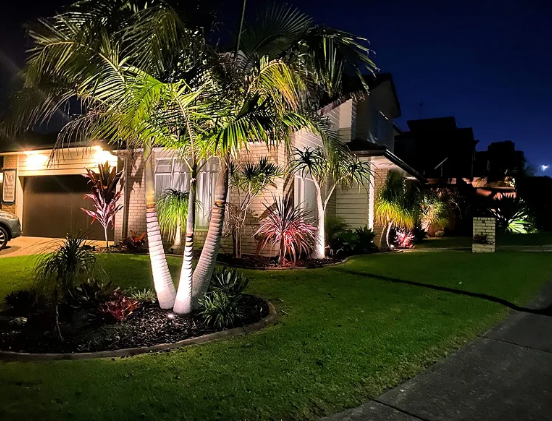
Auckland homes spend a significant portion of the year in conditions that make outdoor lighting genuinely important rather than decorative. The city’s relatively early winter sunsets, its love of alfresco living, and its mix of steep section grades and uneven pathways all create a genuine case for outdoor lighting that goes well beyond aesthetics. A front path that is pleasant to walk on in summer becomes a hazard in winter without adequate light. An entertaining area that gets used enthusiastically through the warmer months becomes unusable in the evening without the right setup. Outdoor lights in Auckland are not a finishing touch. For most properties, they are a functional necessity that also happens to change how a home looks and feels from the street.
Why Auckland’s Rainfall Makes IP Ratings Non-Negotiable
Auckland’s rainfall is persistent and year-round. It arrives as heavy downpours, as sustained drizzle, and as the kind of horizontal rain that a west-facing wall experiences during a decent southwesterly. Outdoor light fittings that are not rated for full weather exposure fail in ways that range from annoying to dangerous — water ingress into the electrical components, corrosion on terminals, and, in the worst cases, fittings that become shock hazards. The IP rating on a light fitting is not a technical detail to skip past on a product listing. It is the specification that determines whether the fitting will still be performing correctly in two years or require replacement after its first serious winter.
What Section Grade Does to Lighting Design
Auckland’s topography creates lighting challenges that flat-city thinking does not account for. Sections that drop away from the street, driveways that switch back down a slope, and entry paths that change level multiple times all need lighting designed for the specific geometry of the site rather than a standard product placed at regular intervals. A light that illuminates a flat path correctly creates pools of light and deep shadow on a sloped one, which is worse than no lighting at all in terms of trip hazard management. Step lights, ground-level path markers, and directional wall-mounted fittings used in combination address changes in level in a way that a single overhead fitting cannot.
How Light Temperature Affects Outdoor Spaces
Colour temperature — the warmth or coolness of the light emitted — changes the character of an outdoor space in ways that most homeowners only notice when something feels wrong. Cool white light in an entertaining area creates an environment that feels more like a car park than a garden. Warm white in a security-focused driveway application can make the space feel residential and welcoming at the expense of clear visibility. Outdoor lights in Auckland chosen without attention to colour temperature often produce spaces that are technically lit but atmospherically flat. The entertaining area feels harsh. The garden loses its depth. Getting the temperature right for the function of each zone — warmer for social areas, cooler and brighter for access and security zones — is what separates lighting that works from lighting that merely exists.
Why Smart Controls Change How Outdoor Lighting Gets Used
Outdoor lights that require manual switching get used less than those integrated into motion sensors, timers, or smart home systems. This sounds minor. It is not. A security light that depends on someone remembering to turn it on is not a security light. A pathway lighting system that requires a separate switch from the front door means the path is dark exactly when it is most needed – at arrival. Motion-activated and timer-controlled outdoor lights in Auckland homes operate independently of habit and memory, which means they are reliably on when the conditions that require them exist, rather than when someone remembers.
The Salt Air Factor for Coastal Auckland Properties
Salt air exposure accelerates corrosion on standard outdoor fixtures in suburbs such as Devonport, Takapuna, Mellons Bay, and the North Shore bays at a rate that is not experienced by inland properties. In these locations, the materials used for the fittings are of paramount importance. Marine-grade stainless steel, powder-coated aluminium, and fibreglass composite housings are durable. Standard zinc die-cast fixtures with basic paint finishes are not affected by this phenomenon, and the degradation is evident within a season of direct coastal exposure.
Conclusion
Outdoor lights in Auckland reward thoughtful selection far more than most homeowners anticipate when they first consider the project. IP ratings, colour temperature, section grade, coastal material compatibility, and control systems all shape whether an outdoor lighting installation performs reliably and looks right across the full range of conditions Auckland delivers. The properties that feel welcoming, safe, and considered after dark are seldom the result of buying whatever was available. They are the result of someone thinking carefully about what each part of the site actually needs.