


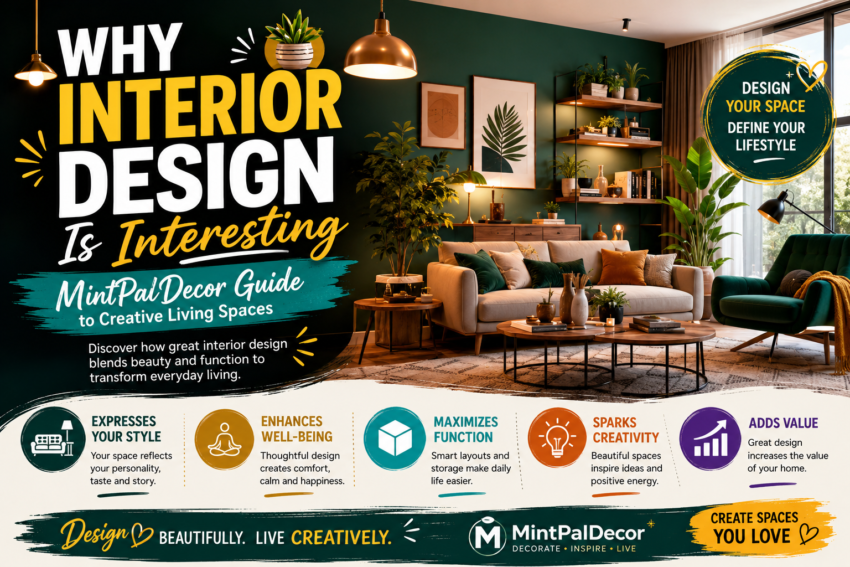
Interior design is much more than selecting furniture or choosing paint colors. It is the art and science of transforming spaces into environments that are functional, beautiful, and meaningful. For many people, interior design is fascinating because it combines creativity, psychology, architecture, and personal expression in a way that directly impacts everyday life.
At MintPalDecor, interior design is viewed as a powerful tool that can improve comfort, productivity, mood, and overall well-being. Whether you’re decorating a small apartment, renovating a family home, or designing a modern office, interior design offers endless opportunities to create spaces that reflect personality and purpose.
In this article, we’ll explore why interior design is so interesting, how it influences our lives, and why it continues to captivate homeowners, designers, and creative minds around the world.
What Makes Interior Design So Interesting?
Interior design stands out because it blends artistic creativity with practical problem-solving. Unlike many forms of art that are simply admired, interior design serves a real purpose in everyday life.
A well-designed room can:
- Improve functionality
- Increase comfort
- Enhance mood
- Boost productivity
- Reflect personal style
- Add value to a property
This unique combination of beauty and utility is one of the main reasons interior design remains such a fascinating field.
Interior Design Combines Art and Function
One of the most interesting aspects of interior design is its ability to balance aesthetics with practicality.
A designer doesn’t simply focus on making a room look attractive. They must also consider:
Space Planning
Furniture placement and room layout determine how people move through a space.
Comfort
A beautiful room loses its appeal if it is uncomfortable or difficult to use.
Lighting
Natural and artificial lighting influence both appearance and functionality.
Storage Solutions
Smart storage helps maintain organization without sacrificing style.
The challenge of combining all these elements makes interior design both creative and intellectually engaging.
Every Space Tells a Story
Interior design allows people to express their personalities, experiences, and lifestyles through their surroundings.
For example:
- Minimalist spaces often reflect simplicity and organization.
- Rustic interiors may highlight a connection to nature.
- Modern designs emphasize clean lines and innovation.
- Traditional styles celebrate history and craftsmanship.
Each design choice contributes to a unique story that makes every home different.
This storytelling aspect is one reason why interior design continues to attract people from diverse backgrounds.
The Psychology Behind Interior Design
Interior design is closely connected to human psychology.
Colors, textures, layouts, and lighting all affect how people think and feel within a space.
Color Psychology
Different colors can evoke different emotions:
- Blue promotes calmness and relaxation.
- Green creates a sense of balance.
- Yellow encourages energy and positivity.
- Gray offers sophistication and neutrality.
Lighting Effects
Proper lighting can:
- Improve mood
- Increase focus
- Reduce stress
- Enhance sleep quality
Spatial Design
Open layouts often encourage social interaction, while private spaces support concentration and relaxation.
Understanding how design influences human behavior adds another layer of interest to the field.
Interior Design Is Constantly Evolving
Unlike many industries that remain relatively stable, interior design is always changing.
New trends emerge regularly, influenced by:
- Technology
- Fashion
- Cultural shifts
- Sustainability concerns
- Lifestyle changes
Popular trends over recent years include:
- Smart home integration
- Sustainable materials
- Biophilic design
- Multifunctional furniture
- Minimalist interiors
This constant evolution keeps interior design fresh and exciting.
Creativity Has No Limits
One of the biggest reasons people find interior design interesting is the endless opportunity for creativity.
Designers can experiment with:
- Colors
- Patterns
- Textures
- Materials
- Furniture arrangements
- Decorative accessories
Even two designers working with the same room can create completely different results.
This freedom encourages innovation and personal expression.
Interior Design Solves Real Problems
Interior design is not only about appearance—it also solves practical challenges.
Common problems include:
Limited Space
Designers use clever layouts and multifunctional furniture to maximize small rooms.
Poor Lighting
Strategic lighting plans can transform dark spaces into bright, welcoming environments.
Storage Issues
Custom storage solutions help reduce clutter while maintaining style.
Inefficient Layouts
Space planning improves flow and functionality throughout a home.
The problem-solving aspect makes interior design intellectually rewarding.
Technology Makes Interior Design More Exciting
Modern technology has transformed the way homes are designed and experienced.
Innovations include:
Smart Home Systems
Homeowners can control lighting, temperature, security, and entertainment systems remotely.
3D Design Software
Designers can create realistic room visualizations before construction begins.
Virtual Reality
Clients can explore digital versions of spaces before making decisions.
Sustainable Technologies
Energy-efficient systems improve comfort while reducing environmental impact.
Technology continues to expand the possibilities of interior design.
Interior Design Improves Quality of Life
Few creative disciplines have such a direct impact on daily living.
A well-designed environment can:
- Reduce stress
- Improve productivity
- Encourage relaxation
- Strengthen family interactions
- Support healthier lifestyles
Because people spend significant time indoors, thoughtful design can make a meaningful difference in overall well-being.
The Connection Between Interior Design and Personal Identity
Homes often serve as reflections of the people who live in them.
Interior design allows individuals to showcase:
- Personal interests
- Cultural influences
- Hobbies
- Values
- Lifestyle preferences
This personal connection makes design projects deeply meaningful and rewarding.
Rather than following trends blindly, many homeowners use design to create spaces that genuinely represent who they are.
Career Opportunities in Interior Design
Many people are drawn to interior design because of the diverse career opportunities available.
Potential career paths include:
- Residential interior designer
- Commercial interior designer
- Furniture designer
- Lighting specialist
- Space planner
- Design consultant
- Sustainable design expert
The industry combines creative fulfillment with professional growth opportunities.
Sustainability Adds a New Dimension
Environmental awareness has become an important part of modern interior design.
Sustainable practices include:
- Using recycled materials
- Choosing eco-friendly furniture
- Improving energy efficiency
- Reducing waste
- Supporting local craftsmanship
Designers now have the opportunity to create beautiful spaces while promoting environmental responsibility.
Future Trends That Make Interior Design Even More Interesting
The future of interior design is filled with exciting possibilities.
Emerging trends include:
- Artificial intelligence in home design
- Smart furniture
- Personalized living environments
- Energy-efficient smart homes
- Wellness-focused interiors
- Advanced sustainable materials
As technology and lifestyles evolve, interior design will continue adapting to meet new needs and expectations.
Conclusion
So, why is interior design interesting? The answer lies in its unique ability to combine creativity, functionality, psychology, technology, and personal expression. Interior design transforms ordinary spaces into environments that support comfort, productivity, and happiness.
Whether you’re redesigning a room, exploring design trends, or considering a career in the industry, interior design offers endless opportunities for learning and creativity. At MintPalDecor, the belief is simple: great design isn’t just about how a space looks—it’s about how it makes people feel and live every day.
FAQs
Why do people find interior design interesting?
People find interior design interesting because it combines creativity, problem-solving, and personal expression while directly improving everyday living spaces.
Is interior design only about decoration?
No. Interior design involves space planning, functionality, lighting, color psychology, furniture selection, and creating environments that support specific needs and lifestyles.
How does interior design affect mood?
Colors, lighting, textures, and layouts can influence emotions, concentration, relaxation, and overall mental well-being.
Why is creativity important in interior design?
Creativity helps designers develop unique solutions that make spaces attractive, functional, and personalized for individual users.
Can interior design increase home value?
Yes. Well-designed interiors often improve a property’s appeal, functionality, and market value.
How has technology changed interior design?
Technology has introduced smart home systems, 3D visualization tools, virtual reality experiences, and energy-efficient solutions that enhance both design and functionality.
Is interior design a good career choice?
Interior design can be a rewarding career for individuals who enjoy creativity, problem-solving, communication, and transforming spaces.
What is the future of interior design?
Future trends include smart homes, AI-assisted design, sustainable materials, wellness-focused spaces, and highly personalized living environments.