


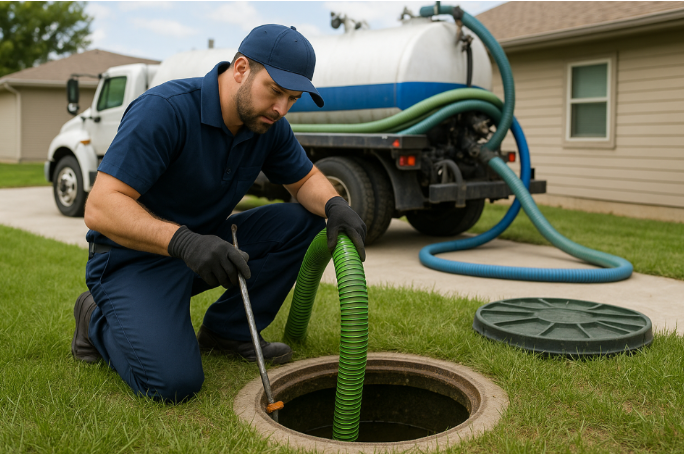
There is a particular type of home repair story that always starts the same way. Everything was fine, nothing seemed wrong, and then one morning the garden smelled like a sewage works and the toilets stopped flushing properly. Septic system failures follow that script with remarkable consistency — not because they are unpredictable, but because the warning signs develop underground where nobody thinks to look.Septic system maintenance is the unglamorous discipline that stands between a functioning household and a crisis that takes weeks to resolve and leaves lasting damage to soil, property value, and occasionally neighbourly relations.
Why Failure Feels Sudden
Septic systems do not fail overnight, but they are very good at appearing to. The actual deterioration is gradual and follows a fairly consistent pattern. Sludge accumulates beyond the tank’s processing capacity. Solids begin passing through to the drain field before they have been adequately broken down. The soil around the distribution pipes starts to clog with biomat — a dense layer of organic material that progressively suffocates the ground’s ability to absorb effluent. None of this is visible from the surface. By the time pooling appears in the garden or drains start backing up inside the house, the drain field has often been under stress for the better part of a year.
The Drain Field Is the Real Vulnerability
Most homeowners think about the tank when they think about their septic system. The tank is actually the more forgiving component. It can be pumped, cleaned, and returned to function relatively straightforwardly. The drain field cannot. Once the surrounding soil becomes biologically saturated or physically clogged with solids that should never have reached it, recovery is neither quick nor simple. Drain field rehabilitation or replacement is the outcome that turns a maintenance conversation into a serious disruption. Septic system maintenance exists largely to protect the drain field by keeping the tank doing its job properly, so the field never receives more than it was designed to handle.
The Biology Nobody Explains
A functioning septic tank is not simply a holding vessel — it is an active biological environment. Anaerobic bacteria are continuously breaking down solid waste, and the efficiency of that process determines everything downstream. What disrupts it is not dramatic or obvious. Regular use of antibacterial hand soaps, concentrated bleach in cleaning products, and certain prescription medications passing through the household all suppress bacterial activity in ways that accumulate quietly over time. A tank can look perfectly normal on a visual inspection and be operating at a fraction of its biological capacity. That reduced capacity does not show up until solids start reaching the drain field, and by then the damage is already in progress.
Pumping Timing Is Misunderstood
The most persistent mistake homeowners make with septic system maintenance is treating pumping as a response to problems rather than a prevention of them. The logic feels reasonable — if nothing seems wrong, why intervene? The answer is that the system looks fine right up until the point where it does not, and the interval between those two states is extremely short compared to the months of strain that preceded it. Pumping on a schedule based on household usage — before any sign of stress appears — is what keeps sludge levels from reaching the threshold where solids begin migrating where they should not go.
What Surfaces When Systems Fail
A septic failure does not stay contained to the system itself. Effluent surfacing in a garden creates ground contamination that affects soil usability for growing, creates genuine health risks for children and animals, and in wet conditions can migrate toward surface water or property boundaries. Beyond the immediate household disruption, a documented septic failure complicates property sales in ways that are slow and expensive to resolve. Surveyors flag it, buyers negotiate hard on it, and remediation evidence is required before any transaction proceeds cleanly.
Conclusion
The homes that never experience a septic crisis are not lucky — they are maintained. Consistent septic system maintenance keeps the bacterial processes functioning, prevents drain field damage that cannot simply be undone, and stops the kind of failure that disrupts daily life for weeks rather than days. Underground systems are easy to ignore precisely because they are out of sight. That invisibility is exactly why they need a schedule, not a crisis, to prompt attention.